Affichage des articles dont le libellé est Week 5. Afficher tous les articles

vendredi 15 septembre 2017

Week 5 Story Planning: Sindbad the Sailor and his Successors

I want to write a story where Sindbad has a become a tradition, a role to assume when there is an adventure to be had and a need for treasure. I am inspired by the fact that Sindbad told his stories to a fellow he met who was also named Sindbad, and also by Dread Pirate Roberts from The Princess Bride.

Presumbly, the tradition would have carried on from that time till the present day. They would likely have initially worked for Harun Al-Rashid, a caliph in the Abbasid caliphate in the late 8th century. The Abbasid caliphate ruled the entire Middle East and much of North Africa at its height. Under its reign, the arts and sciences flourished. A Thousand and One Nights (also known as the Arabian Nights), which contains the tale of Sindbad, was compiled during this period. 
Abbasid Caliphate. Web Source: Wikipedia

The Abbasid caliphate's rule in Iraq ended after the Mongols invaded. In the latter half of the 18th century and the beginning of the 19th it was under the rule of the Mamluk dynasty. In the mid-19th century the Ottomans gained control of the region. In my story, the tradition of Sindbad the Sailor would have continued through the different dynasties.

One of the other real places that Sindbad visits is the island of Serendib, known formerly as Ceylon and now being the modern country of Sri Lanka. Part of his accomplishment and then mission was to establish a relationship between Harun Al-Rashid and Serendib. My story will tell how his successor in the early 19th century was called upon to help the kingdom of Kandy, located on the island of Lanka, defend itself against the British East India Company. The British were actually defeated in one of the Kandyan wars, so I may have that be due to Sindbad's intervention. 
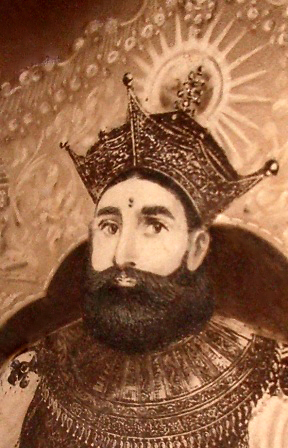
File:Sri Vikrama Rajasinha.jpg
The Last King of Kandy. Web Source: Wikipedia

To incorporate more elements from the original stories, I will bring some of the other creatures, such as the rocs, giant snakes, and elephants, onto Serendib, although they were originally found on other islands. They will serve as allies to Sindbad in his fight against the British.

Bibliography: Andrew Lang's The Arabian Nights' Entertainments, link

mercredi 13 septembre 2017

Reading Notes: Sindbad, Part B

Two things that struck me during the second half, which were also present in the first half, were that even though Sindbad is clearly a very adventurous person, he does have a tendency to wish he had stayed at home in luxury. This seems not to occur when he is in a crisis, but rather when he is alone and without a clear source of help. Basically, he gets homesick.

Secondly, I forgot to mention in my first reading notes that the currency is called the sequin. I assume he is not getting rich with these....

Sequin. Web Source: Wikipedia

Some further searching shows that the sequin was a Venetian currency, a gold coin minted from 1284 to 1797. In addition, the Ottoman Empire minted a similar coin starting in 1478. However, Sindbad's adventures occur during the reign of Harun al Rashid, who ruled from 763 to 809. His currency was the dinar, so the use of the sequin here is an anachronism, albeit an amusing one.

My more general takeaway was that Sindbad's story conveys what the narrator values without imposing an obvious moral on the story. For example, Sindbad survives multiple times because of the generosity of people who discover him starving, as after he escapes on a raft from the jeweled cliff and ends up in a strange land. At other times, he survives because of his patience and ability to endure crises with a cool head. He extols the virtues, particularly the justice of the king of Serendib. Finally, his end goal is spend the rest of his life with his friends and family. Thus, these stories extol the virtues of hospitality, endurance, justice, and family life positively. I appreciate this manner of conveying a message, with an interesting character, plenty of adventure, and rewards for the presence of virtue instead of consequences for its absence.

Bibliography: Andrew Lang's Arabian Nights' Entertainments, link.

Reading Notes: Sindbad, Part A

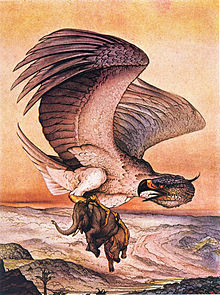
First of all, Sindbad is a really interesting character. He starts out rather profligate with his wealth, but decides to invest it with a combination of thought and daring. But upon gaining wealth, he is very generously with it, donating charitably to the poor and the mosques of his homeland. Although his subsequent adventures serve to make him even wealthier, his motivation is adventure and wanderlust, not earning money. I am particuarly fond of his adventurous spirit combined with kindness and ingenuity. My favorite story was that of the roc and the valley of diamonds, because the dangers are magnificent animals and he does not have to kill them to escape.
Edward Julius Detmold49.jpg
Roc. Web Source: Wikipedia

I like the serial nature of Sindbad's story, which reminds me of modern storytelling, particularly in TV shows. Sindbad also seems to have somewhat of a superhero story arc, which could be enhanced. His origin story would be his realization about his poor spending habits which will leave him destitute, causing him to pursue a life of adventure and ultimately generosity. This would be more apparent if his motives were more deeply described. For example, what specifically prompted his realization that growing old in poverty would be a life of misery? What if his mission on his voyages was not just wanderlust, but specifically a desire to gain additional wealth for the poor in his hometown?

If someone were to turn the story of Sindbad into a superhero show, they would have a wealth of fantastic creatures and villains, from the roc to the giant snakes to the cannibals. It might be a bit of a challenge to integrate them into a real world universe. Perhaps the idea would be that these are islands that are somehow hidden from the rest of humanity, like the island of Themyscira in Wonder Woman.

Bibliography: Andrew Lang's Arabian Nights's Entertainments, link.